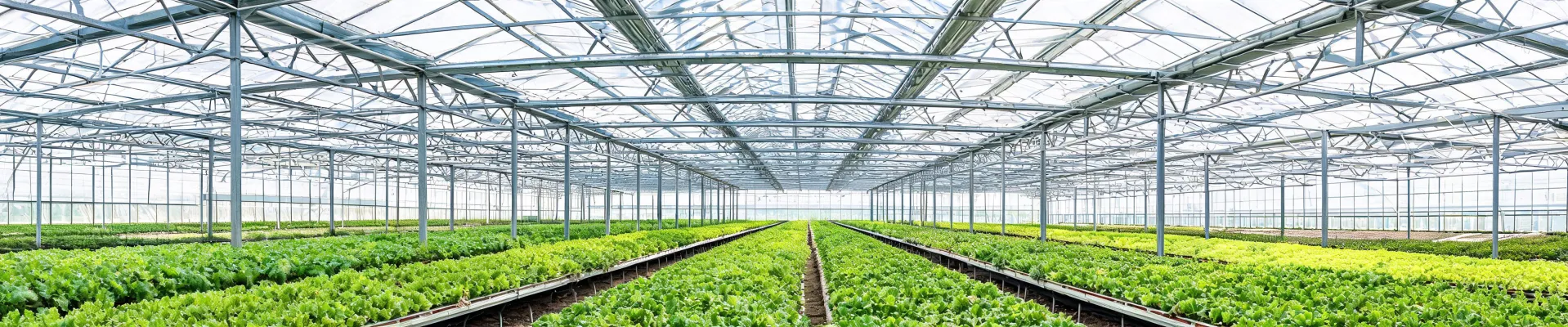
For a commercial greenhouse that grows through the heating season, the inflated double layer is the better first purchase. The exception is a house where snow sitting on the frame is the binding constraint; there, the panel's own load specification decides the buy, and the word rigid on a quote decides nothing.
I run coverings on a maintenance schedule rather than a sticker price. Film asks for a blower that keeps running and a re-skin every few years. Panels ask for a structure that can carry what their manufacturer rates them to carry. Which of those two bills your operation can actually pay is the whole comparison, and nothing below settles the snow capacity of your particular building.
When the Heating Season Picks the Double Layer
Heat is the first filter. If the house grows during the heating season, an inflated double layer with an air space between the two sheets is the sensible default, and the extension guidance behind that recommendation credits it with cutting night heat loss by about 40 percent. That figure belongs to an inflated double layer as a covering type. Treat it as the reason the double layer earns its place, not as a number you can paste into a fuel budget for your own house.
The same guidance is plain about where the double layer is not the default. Single-layer plastic is described as common on high tunnels and nursery overwintering houses, structures that either run unheated or close down for the cold months. If your house shuts in December, you are not buying insulation. You are buying a roof, and one layer does that job.
I notice the difference on a windy afternoon, walking the alley between a single-layer house and an inflated one. The single sheet is working against the frame, moving and snapping at every gust, while the inflated house sits still. That stillness is not decoration; it is the attachment hardware being spared a great many small loads over a winter.
What Rigid Panels Buy and What They Don't
Hard plastic panels carry one documented advantage in the extension literature: they tend to withstand snow loads during winter storms. Read that carefully. It is a tendency attached to a covering type, not a rating for the panel sitting in your quote, and the distinction matters the moment two suppliers both call their product rigid and neither hands you a load number.
So use the snow statement for what it is good for. It tells you panels belong in the conversation when snow on the structure is your binding concern. The actual figure comes from that panel manufacturer's own specification, checked against what the frame and the building's engineering will carry. A load number lifted out of a general article is worth nothing on a permit drawing or an insurance file.
Walk the Frame Before You Price Film
Walk the frame before you price film.
That walk is where the cheap failures get designed in. Attachment stress, abrasion on rough surfaces and sharp edges, and heat build-up around rafters, purlins and extrusions are all named as causes of early film failure, and so is contact with chemicals from pesticides or pressure-treated lumber; on a site with several houses standing close together, blowing ice can cut the film too. I start at one gable and work along the rails with a hand on the steel, because a burr I can feel through a glove is a burr that will saw at the film for seasons to come. Then I go up the rafters and purlins looking for the spots that bake in the afternoon sun, since heat build-up in those zones ages the sheet from the inside where I cannot see it. Next come the chemical touchpoints, the apron where the sprayer gets filled and any treated lumber the film lies against or rubs on. Last, I stand in the alley between houses and look at what blowing ice would have to cross to reach the cover.
Every item on that list either clears or changes the film you order.
Where the walk turns up abrasion or ice exposure, a scrim-reinforced poly is the material to price. Where the frame comes up clean, that reinforcement is money you do not have to spend, and you have a written reason for skipping it.
Set the Blower and Inflation in Order
Hang the layer pair first, connect the blower next, then inflate and confirm the inflation actually did its two jobs. The guidance names a specific static pressure as best, with a slightly higher setting advised for windy or snowy weather, and I keep both settings written on the blower housing because the difference between them gets forgotten between October and the first real storm.
Inflation separates the layers into an insulating air space, and it takes stress off the attachments and reduces the rippling film does on a windy day. The check is not whether the blower is humming. It is whether the two layers read as evenly separated rather than slack, and whether a gusty afternoon still sets the film snapping against the frame. Snapping means the pressure or the attachment is off, and it will keep being off until someone walks out there and looks.
One plumbing detail earns a line in the quote: connect the blower to draw outside air. That reduces condensation between the two layers, and condensation between layers is the kind of problem you discover a season after it started.
Recurring Costs That Decide the Comparison
The double layer is usually the cheaper of the two to install, and the plastic may need to be replaced after three to five years. That single sentence reshapes the whole comparison. A covering on a three-to-five-year cycle is a line item you pay again and again for as long as you farm. A panel is not automatically the buy-once answer either, because its service life comes from its manufacturer, not from the fact that it feels permanent in the hand.
I list what my operation will actually carry before I compare prices: the film and the labor to re-skin, the blower's runtime, and the pressure adjustment routine through windy and snowy spells. Re-skin labor is the number people leave out, and it is the one that decides whether a Saturday in October is a chore or a crisis in the middle of shipping week.
Suppose a site lets the blower lapse for a week during a cold snap. The inflated layer stops being an inflated layer: the air space collapses, the film goes slack against the frame, and what remains behaves like a single cover with a spare sheet hanging under it. That is a scenario to plan against, not a measured result, and it is why the blower belongs in the maintenance log next to the heating equipment rather than on a mental list.
Checks That Confirm the Covering Choice
Before the order goes out, I hold three things against the written quote. The film spec has to match what the frame walk found, worked out in the section above, reinforced where abrasion or ice exposure turned up and plain where it did not. The blower has to be specified to draw outside air, for the condensation reason already described. If panels are still on the table, their quote has to carry a snow-load specification from that manufacturer rather than a figure borrowed from a general article or a competitor's brochure.
Any one of the three missing means the comparison is not finished, however close the prices look on the page. I also write down what the quote leaves out, whether that is stripping the old film, disposing of it, or the crew days the re-skin will eat, so a cost that shows up in year two can be traced to a line I chose to skip rather than to a surprise.
What I Watch Through the First Storm Week
The first windy or snowy stretch is when the covering tells me whether it was set up right. I check layer separation first, then rippling, because an inflated house should look inflated and not tight and drumming. When the forecast turns, I raise the inflation slightly, which is what the guidance advises for windy or snowy weather. And I look between the layers for condensation, since that is the signal to move the blower intake to outside air.
What that routine cannot tell me is whether the structure itself will carry the snow. There is no load calculation or heat-loss calculation for the house in front of me here, and that work belongs to the building's engineering and to the manufacturer's documents for whichever cover goes on it. A covering decision is a maintenance decision. It is not a structural rating, and it should never be treated as one. The action that costs nothing today: put the blower on the same maintenance log as the heating equipment, and write both pressure settings on the housing where the next person will find them.
